Ticket Sales Aren't a Launch Problem, They're a Cycle Problem
Most event organizers put serious effort into two moments: the on-sale announcement and the final-week push. Everything in between gets left to chance. That's where events die quietly, not in a single crash but in weeks of flat sales charts that no one's actively trying to fix.
The events that sell out aren't the ones with the biggest launch splash. They're the ones that keep momentum through the long middle stretch, recover the revenue most platforms let leak out, and give partners the tools to sell on their behalf. This guide covers the tactics that actually move tickets across the full cycle, along with the Big Tickets features built specifically for each one.
1. Launch Strong: The First 72 Hours Set the Ceiling
Your on-sale launch does more than drive initial revenue. It anchors demand signals that influence your entire campaign: early-bird tier sell-through sets your pricing confidence for the rest of the cycle, first-day sales velocity tells you whether your audience targeting is working, and initial social engagement determines how far your organic reach will travel.
What to have in place before tickets go live:
- A clear early-bird tier with a hard stop. Quantity-capped ("first 500 tickets at $49") creates stronger urgency than date-capped ("early bird until March 15"). Big Tickets supports both, so you can layer them: sell the first 500 at the lowest price, then escalate by quantity through the full early-bird window.
- Email list warmed up. Your existing ticket buyer list is the single most valuable audience you have. A warm-up email two to three days before on-sale, announcing the announcement, meaningfully improves first-hour conversion.
- Pixels and UTMs ready. Your Meta Pixel and Google Analytics 4 tracking should be live before a single person hits your ticket page. You can't retarget, optimize, or attribute if you weren't tracking from minute one.
- Paid social scheduled but throttled. Launch-day paid ads should target your warmest audiences (past buyers, email subscribers, site visitors) at a controlled spend. Pouring budget into cold audiences on launch day is how CAC balloons while tickets aren't moving fast enough to justify it.
Measure the first 72 hours carefully. If initial sales are tracking behind projection, you have a targeting or pricing problem you need to diagnose before the campaign ages another week.
2. Put Your Best Sellers to Work: Affiliate and Partner Tracking
This is the highest-leverage move most organizers never make. Your artists, sponsors, media partners, influencers, and previous-year attendees all have audiences that overlap with yours. If you make it easy for them to sell tickets on your behalf, and give them credit (and commission) for the sales they drive, they'll do it.
The problem historically has been measurement. Generic UTM tags don't track purchases, promo codes don't tie back to individual partners cleanly, and spreadsheet-based commission reconciliation is painful. Most organizers end up either not paying partners at all (which kills the incentive) or paying generous flat fees (which kills the margin).
Big Tickets solves this with a dedicated affiliate tracking portal. Organizers can:
- Create unique tracking links for every affiliate, partner, sponsor, artist, or media contact
- See real-time performance per partner, including clicks, conversions, revenue, and conversion rate
- Set commission structures per partner (percentage-based or flat-fee)
- Give partners their own login to monitor their own performance
- Reconcile payouts from clean, accurate data instead of guessing
Affiliate programs work especially well for festivals with artist rosters (every band has its own fan base), event series with cross-promotion opportunities, and sponsor relationships where brands have incentive to drive attendance. Set commission at a level where the math works for both sides: commonly 5–10% of ticket revenue for most festival affiliate programs, higher for high-value partners where the acquisition cost still clears your margin target.
Even if you don't formally pay commissions, the tracking alone is worth running. It tells you which partners are actually driving sales versus which just want logo placement on your event page.
3. Price Like You Mean It: Dynamic and Tiered Pricing
Flat pricing leaves money on the table at both ends: you underprice the buyers who would pay more for urgency or premium access, and you overprice the buyers who would commit early at a discount but are waiting for a better deal that never comes.
Dynamic pricing fixes both problems. You offer a lower price now in exchange for early commitment, then escalate as inventory sells or dates advance. Done right, it accelerates cash flow, creates urgency without manipulation, and lets you capture more of the revenue demand is willing to give you.
Big Tickets supports two dynamic pricing mechanisms, which organizers can layer:
- Quantity-based pricing. Set price tiers that activate as inventory sells. For example: first 500 tickets at $49, next 500 at $59, next 500 at $69, and $79 after that. Buyers see a clear "only X left at this price" signal, which creates real urgency without fake scarcity.
- Date and time-based pricing. Set price changes to activate on specific dates. Classic early-bird ($49 through March 1, $59 through April 1, $69 from April 1 onward) is the simplest version, but you can also run flash windows (24-hour promo codes, weekend pricing, payday promotions) to move tickets during sales lulls.
For the full pricing picture, you can also build ticket and add-on bundles that sell as a single item: VIP + parking pass, weekend pass + camping, GA + drink credits, group packages with merch included. Bundles raise average order value and reduce friction; a buyer who would have considered parking separately often won't. Packaged as part of the ticket, it just becomes part of the decision.
4. Work the Middle: Driving Sales Through the Lull Period
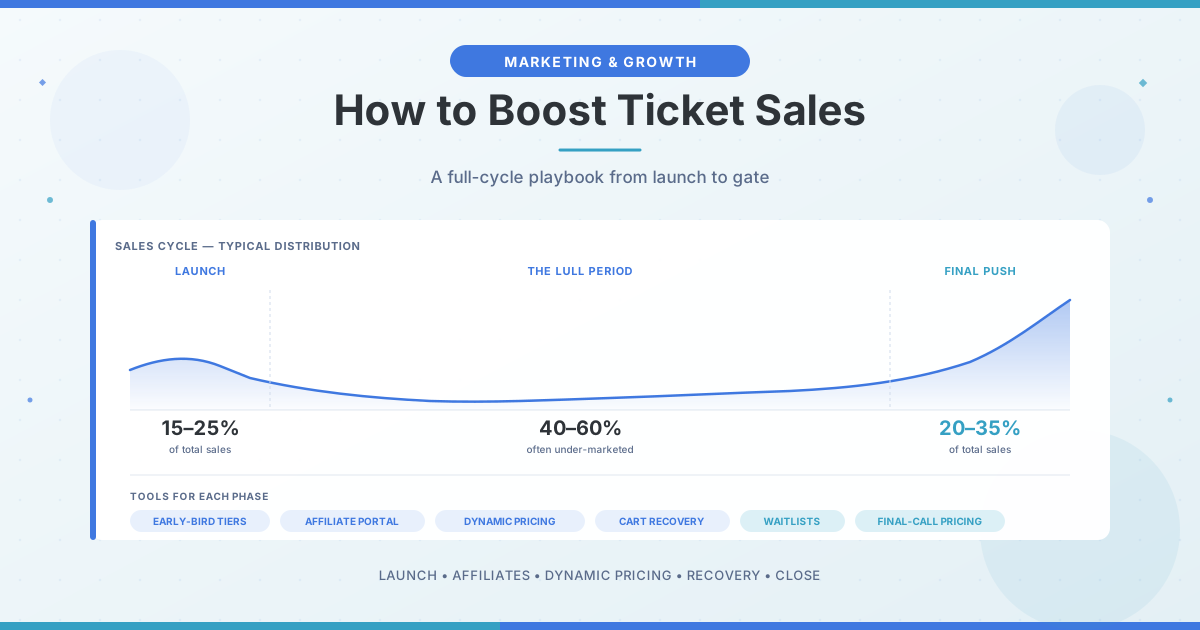
Between launch week and final-week crunch lies the longest and most underinvested stretch of the sales cycle. For a multi-month campaign, this middle period can account for 40–60% of total ticket volume, and it usually requires the most active marketing to sustain.
The organizers who sell out are the ones who plan for this phase like they plan for launch. A practical cadence for the middle period:
- Weekly email rhythm. Don't disappear on your list. One email per week during mid-cycle, each focused on a different angle: artist/lineup reveal, behind-the-scenes content, what's new this year, pricing deadline reminders, attendee spotlights from past years.
- Content-driven social, not just sales-driven. 80% of your mid-cycle social content should be experiential (clips, photos, stories) and 20% should be promotional. Flipping that ratio leads to fatigue and lower engagement, which ultimately hurts the promotional posts more than it helps.
- Retargeting for people who visited but didn't buy. Meta and Google retargeting captures the highest-intent cold audience you have. If your Meta Pixel has been running since launch, you'll have a meaningful audience to retarget by week three.
- Planned activation moments. Announce something every two to three weeks: a new artist, a new ticket type, a flash sale, a contest, an early access window for email subscribers. Calendar these in advance so you're never scrambling for "what do we post this week."
- Partner pushes aligned with affiliate portal reporting. Reach out to your top-performing affiliates mid-cycle with new assets, bonus commission windows, or exclusive promo codes. The data will tell you which partners have the audiences that actually convert.
5. Recover the Revenue Most Platforms Lose
Every event loses a meaningful percentage of would-be ticket sales to three revenue leaks: abandoned carts, sold-out demand, and last-minute buyers who can't complete checkout. Platforms that don't help you address these are leaving money on the table by design.
Big Tickets includes native tools for all three:
- Abandoned cart recovery. When a buyer adds tickets to their cart but doesn't complete checkout, automated follow-up email sequences prompt them to return. Industry-wide, cart abandonment often runs 60–70% for event tickets. Even recovering a small fraction of those carts compounds meaningfully across a full sales cycle.
- Waitlist. When a ticket type sells out, don't just tell buyers "sorry." Capture their email address, ticket preference, and contact info through a waitlist. You get a built-in marketing audience for future capacity increases, additional releases, or next year's presale, plus a demand signal that informs future pricing and inventory decisions.
- Mobile-optimized checkout. Most ticket purchases now happen on phones. A checkout that requires 12 form fields, forces account creation, or loads slowly will hemorrhage sales in the final-week rush. Big Tickets' checkout is built mobile-first with saved payment methods for returning buyers.
6. Use the Right Channels, Not All the Channels
The 2018 version of this post recommended AdRoll, Snapchat, and Google AdWords. The 2026 channel mix looks different. Here's what actually moves festival and live event tickets today:
- Meta (Facebook and Instagram). Still the highest-volume paid channel for most festival and concert audiences. Instagram works better for visual content and younger demos; Facebook still drives strong conversion for 35+ audiences and long-form event pages.
- TikTok. Essential for reaching audiences under 30 and for music festivals in particular. Paid TikTok ads work well; organic reach through artist content and creator partnerships works even better.
- Google Ads. Search ads for branded queries (your event name) should always run, cheap and high-converting. Non-branded search ads ("music festival Atlanta 2026") work when you're acquiring new audiences at scale.
- YouTube. Underrated for festivals and touring artists. Pre-roll ads on genre-relevant content convert well, and recap videos from past years are among the highest-value owned assets you have.
- Email. Your own list is your highest-converting channel by a wide margin, with no algorithm risk and no rising ad costs. Invest in growing it year-round, not just during sales cycles.
- Affiliate and partner network. Covered in section 2. Often the lowest-CAC channel if structured well.
You do not need to be on every platform. Pick the three or four where your audience actually is, and do them well. Spreading a modest budget across six channels almost always underperforms concentrating it on two.
7. Close Strong: The Final Two Weeks
The last 14 days before your event typically deliver 20–35% of total ticket volume for festivals and large-scale events. If your campaign has been running well, this is where it pays off. If it hasn't, this is your last chance to correct.
Tactics that work in the closing window:
- Daily reminders with concrete information. Weather forecasts, updated set times, parking info, what to bring. Practical content converts better than promotional content at this stage.
- Real scarcity messaging. If you have 200 GA tickets left, say so. Buyers who've been on the fence for weeks convert when the decision becomes now-or-never.
- Final-call pricing. A modest price increase in the final week ("prices go up Friday") creates the urgency to convert undecided buyers without undermining your early-bird buyers who got the lower price for committing early.
- Day-of walkup traffic. For events that sell walk-up tickets, your on-site box office becomes your final sales channel. Make sure it can handle volume and that your payment processing is rock solid.
The Platforms That Boost Sales Look Like Partners
The tools in this post are things Big Tickets handles natively, because they're what organizers actually need to drive ticket sales. Not premium add-ons, not subscription upgrades, not features dangled behind contract tiers. When you're running a live event with real financial stakes, your ticketing platform should be doing this work with you, not making you route around it.
Ready to Run a Smarter Event?
Big Tickets helps festivals, fairs, concerts, and live events sell more tickets, streamline operations, and deliver a better attendee experience. No subscriptions, no setup fees.
Request a Demo